Femicide in Iran; Violence Rooted in Power Relations
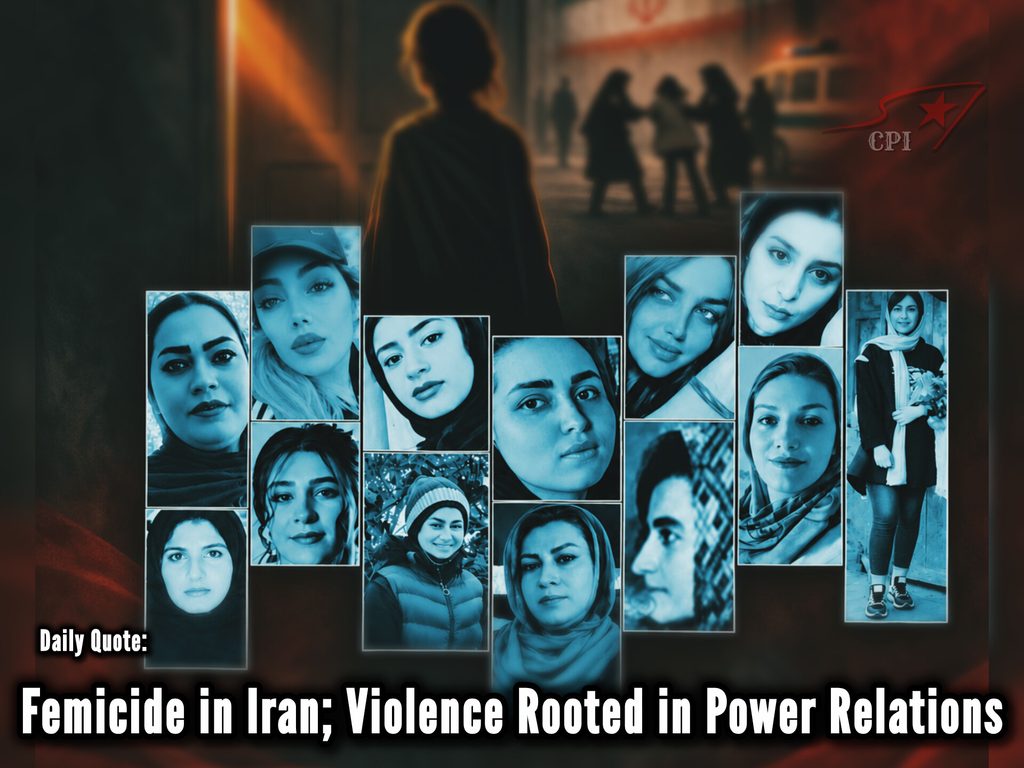
In recent weeks, news of women being killed by the closest people in their lives has once again returned to the headlines. Reports published in November 2026 indicate that at least 84 women and girls have been killed from the beginning of the year through late October. In the first 21 days of October alone, at least 18 cases of femicide were recorded, meaning that approximately one woman lost her life every day.
Another investigation reports 38 deaths across 28 cases over a two months period, while reports published in late November have brought the number of victims over eight months to at least 113 women and girls. These figures cover only cases that have reached the media. The actual number is likely much higher, as many of these killings remain concealed in the silence of families and clans.
The common pattern in these cases is clear. In most instances, the killer is a husband, former romantic partner, father, or brother, and the motives revolve around opposition to marriage or romantic relationships, requests for divorce, suspicion, and family disputes. In other words, women are often killed at the very moment they seek to make decisions about their own lives, and the analysis must begin precisely at this point.
The reality is that femicide cannot be reduced to a “backward culture” or an individual’s psychological instability. The patriarchal family has historically been an institution for the transfer of property, lineage, and labor, and within this institution, a woman’s body and labor power were regarded as part of the family’s or clan’s assets. The concept of “honor” is the cultural expression of this ownership relationship, with men defined as its guardians.
Within such a structure, every sign of a woman’s independence “from choosing a spouse to employment and divorce” is perceived as a loss of control over that asset and collective reputation. When this control is challenged, violence becomes a means of reclaiming it, and murder is its most extreme form.
Over the past century, women’s position in Iran has undergone significant changes. Women have gained access to higher education, constitute the majority in many academic fields, and have envisioned new horizons for their lives. However, this transformation has not occurred equally across all social layers and regions. Statistical averages sometimes create the illusion that society has moved beyond traditional structures, while in many marginalized and deprived areas, early marriage, strict control over women’s behavior, and the dominance of clan structures remain firmly in place.
Gender inequality here is intertwined with class and regional inequality, and women with the fewest economic and social resources suffer the most. Nevertheless, femicide is not confined to the lower classes and is also seen among educated and affluent groups, because the logic of ownership over women transcends class boundaries.
This violence does not occur in a vacuum. The existing legal structure exempts fathers and husbands from the punishment of qisas under certain circumstances, thereby sending the message that a woman’s life holds less value than the “right” of the male head of the family. Bills aimed at protecting women against violence have remained stalled for years between decision-making institutions, while nongovernmental safe houses, which served as the last refuge for many women, have been dwindling.
A state whose gender policies are built around strengthening the traditional family and controlling women’s bodies effectively aligns itself with the logic of domestic patriarchy. Official control over women’s clothing and behavior in public spaces and violent control within the home are two faces of the same order.
Economic pressure also plays a decisive role. Inflation, unemployment, declining public services, and livelihood insecurity both increase women’s economic dependence on men in their families and deprive them of the possibility of separation and independent living. A woman without income, housing, or institutional support has no way to escape a violent household.
On the other hand, men who have lost their traditional position as breadwinners in a crisis-ridden economy sometimes find the home and women’s bodies to be the only remaining arena in which they can exercise power. Austerity policies and the downsizing of social support therefore directly affect the number of victims.
Perhaps more bitter than the killings themselves is the silence surrounding them. In some parts of society, the prevailing attitude is still that when a woman is murdered, her behavior must first be scrutinized, as though the victim must justify her right to live. Instead of unequivocally condemning violence, this attitude seeks to justify it and provides the murderer with moral backing.
This silence is not accidental. Culture changes more slowly than technology, and a society can simultaneously have universities, the internet, and deeply rooted discriminatory beliefs.
When official institutions and state controlled media reduce these killings to scattered crime reports, their structural nature remains concealed.
At the same time, our understanding of men’s identity transformations remains very limited. Society more or less knows what women want, but knows far less about whether men view these changes as an opportunity for more equal relationships or as a threat to their power and status. Traditional masculinity, built on control and possessiveness, also traps men within imposed roles. Without serious dialogue with men and about masculinity, a significant part of the roots of violence will remain untouched.
Legal reform is a necessary condition, but it is not sufficient. Global experience shows that even the most advanced laws cannot eradicate violence on their own. Abolishing legal exemptions for fathers and husbands, adopting comprehensive legislation against domestic violence, and providing public funding for safe houses are essential.
However, these reforms must be accompanied by ensuring women’s economic independence, universal social services, public education, and freedom for independent women’s organizations to operate. Civil society institutions, media, and nongovernmental organizations can transform attitudes through documentation, awareness-raising, and creating social dialogue, provided they are not silenced by security pressure. Men’s participation in this process is also essential, because gender equality is not exclusively a women’s issue.
Femicide is not an isolated phenomenon but a sign of a profound conflict between two worlds of values. One is based on control and ownership, while the other emphasizes the right to choice and individual autonomy. Women’s liberation cannot be separated from the liberation of society as a whole from relations of domination, and the demand for women’s independence and equality is an inseparable part of any project of social justice in Iran today.