Why Did American Voters Turn Their Backs on the Ruling Party?
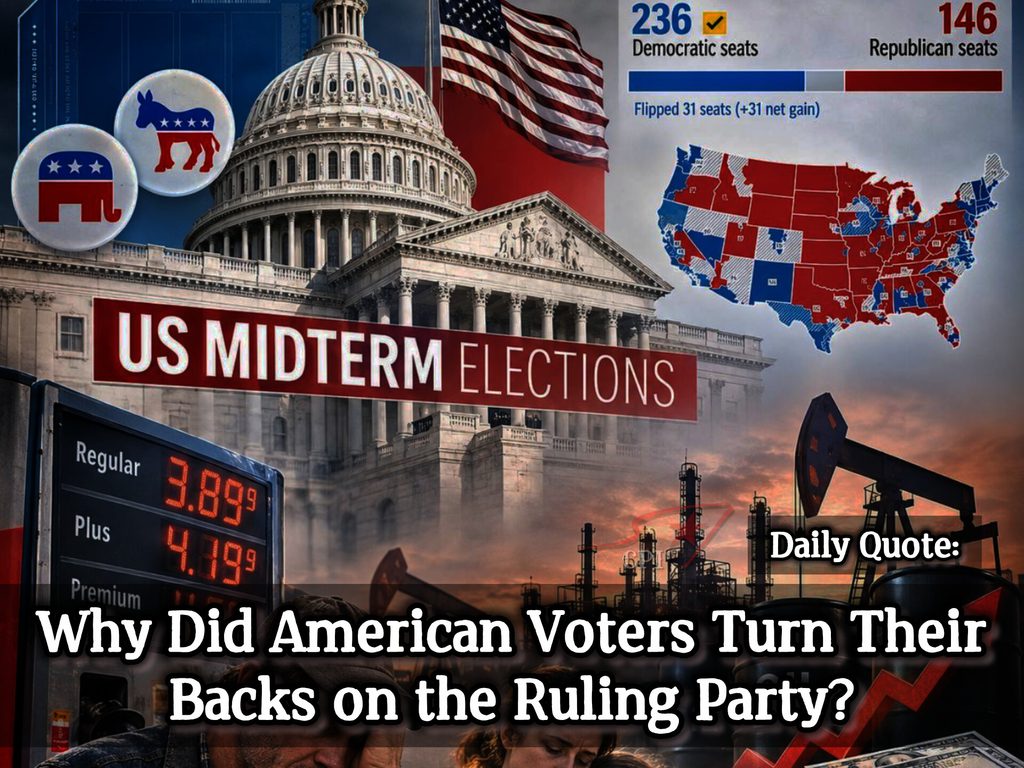
The results of the US midterm elections, announced yesterday, marked one of the heaviest defeats for the Republicans in recent decades. According to reports, the Democrats gained control of both chambers of Congress and also won in several key states. Many analysts regard these elections as a kind of referendum on the performance of Donald Trump’s administration. But behind this political shift lies an economic and social question: Who in the United States benefited from the war with Iran, and who paid the price? The answer to this question goes a long way toward explaining why American voters turned their backs on the ruling party.
The biggest losers in this war were ordinary American households. The war with Iran had a direct impact on global energy markets, sharply driving up oil and fuel prices. As a result, the costs of transportation, heating, electricity, and many essential goods increased. For a family whose members drive to work every day or spend the winter facing hefty heating bills, the war was not a distant event but a tangible reality in everyday life.
According to economic assessments, the indirect costs of the war for each American household are estimated at around $2,000. The total damage inflicted on the US economy is also estimated at nearly $265 billion. These figures translate into reduced purchasing power, diminished savings, and greater pressure on household budgets.
Among those who lost out, low-income groups and workers were the hardest hit. The reason is clear: energy and transportation account for a much larger share of their expenses than they do for affluent households. When gasoline prices rise, a wealthy family may see only a change in one figure on its monthly bill, but for a working class family, it may mean having to cut back on other essential expenses. The middle class was not spared either, as it struggled with rising living costs and inflation.
Another group that lost out was American taxpayers. The direct military cost of the war has exceeded $47 billion, an amount financed through public funds and ultimately paid out of citizens’ pockets. In this way, ordinary people paid twice: first through taxes to cover military expenditures, and then through higher prices for fuel and goods.
On the other side of this equation stood a small group of economic actors who made unprecedented profits from the same crisis. According to estimates by The New York Times, 51 major American oil and gas companies made more than $130 billion in net profits between April and September 2026. During the same period the previous year, their profits had been less than $47 billion. In other words, these companies’ profits nearly tripled during the war.
The important point is that most of this increase in profits did not result from innovation, higher productivity, or new investments. Rather, it was the result of a surge in global oil prices and restrictions on energy supplies caused by the war. In other words, the same crisis that meant higher costs for millions of consumers became a golden opportunity for energy giants.
In addition to oil and gas extraction companies, refineries and petroleum product manufacturers were also among the main beneficiaries. Restrictions on gasoline and diesel supplies pushed refinery profit margins to unprecedented levels. The higher fuel prices rose at gas stations, the greater the profits of companies involved in energy production and distribution.
Major shareholders and large scale investors were also among the beneficiaries. The enormous profits made by energy companies ultimately flowed into the pockets of their shareholders, a group generally drawn from the wealthiest segments of American society.
A comparison between these two groups offers a clear picture of inequality. On the one hand, the war’s military costs exceeded $47 billion, and each household incurred around $2,000 in additional expenses. On the other hand, oil companies made more than $130 billion in profits. For many Americans, this contradiction became a symbol of economic injustice. Families who had to cut back on other expenses just to fill their car tanks or pay their energy bills were simultaneously hearing reports of oil companies making tens of billions of dollars in profits.
From these citizens’ perspective, a war that was supposed to serve America’s national interests had, in practice, resulted in a transfer of wealth from ordinary consumers’ pockets to the accounts of major energy corporations. The perception that “the costs are shared by everyone, but the profits are private” became one of the most powerful political motivations behind these elections.
This economic divide dealt a serious blow to the Republicans.
A significant part of their social base consists of workers, employees, and low income families, that is precisely the groups that bore the greatest burden of rising fuel prices and inflation. Exit polls showed that concerns about the economy and the cost of living were among voters’ main motivations.
The Democrats also made this issue the centerpiece of their campaign. They repeatedly emphasized that American families were paying for the war through inflation and declining purchasing power, while major energy companies were making record profits. This message resonated particularly strongly in industrial states and working class areas, drawing some voters who had previously supported Trump toward Democratic candidates.
The midterm elections sent a clear message: American voters are unwilling to shoulder the economic burden of war while its benefits go to a limited group of the most powerful economic actors. From this perspective, the Republicans’ defeat was a direct response by society to the perceived injustice in the distribution of the war’s costs and benefits.