Let Us Not Abandon Political Prisoners and Their Families
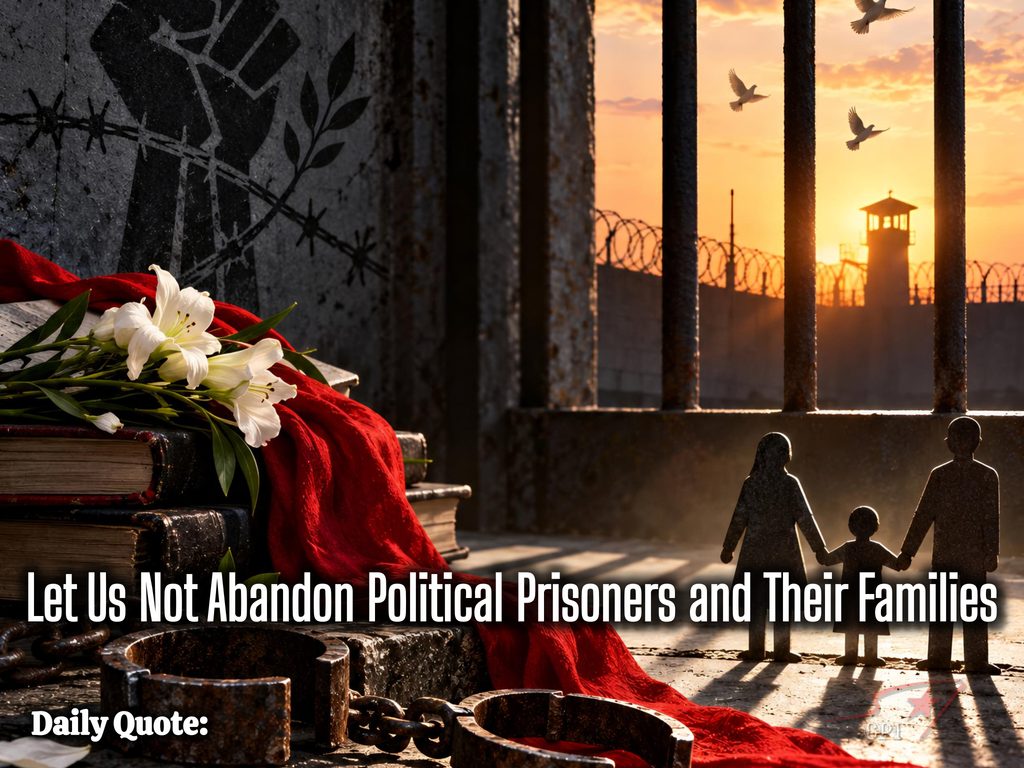
Iran’s political prisoners are women and men who are paying the price for defending the most fundamental human rights. They demand freedom of expression and the press, equality between women and men, the abolition of discrimination against national and religious minorities, environmental protection, the right to establish organizations and political parties, the rights of workers and laborers, an end to repression, and access to the means necessary for a life worthy of a human being in the modern world. Their crime is that they have dared to demand the right to live in a free and equal society.
Over more than four decades of rule, the Islamic Republic has executed thousands of political prisoners and arrested, tortured, and imprisoned hundreds of thousands of people. It is difficult to find a family, neighborhood, factory, office, or village in Iran in which at least one member, neighbor, or colleague has not experienced political imprisonment or exile.
The diversity of political prisoners is itself the clearest evidence of this reality. Communists and labor activists, journalists and writers, lawyers and scientists, feminists and women’s rights activists, members of national and religious minorities, environmental activists, musicians, artists, and filmmakers are all held in the prisons of this regime. This breadth demonstrates that opposition to the Islamic Republic is not confined to a single social group or ideology. It involves a large section of Iranian society, across different classes and political viewpoints.
As opposition to the government has expanded, its methods of repression have also become more sophisticated. In recent years, reports by international human rights organizations, United Nations special rapporteurs, and numerous testimonies from prisoners have painted a disturbing picture of Iran’s prisons. Denial of medical care, the forced administration of psychiatric medication, and the use of medical procedures to exert pressure on prisoners have become common practices in detention facilities. The problem is not simply a lack of healthcare resources; according to these reports, in some cases, medical treatment itself has become an instrument of repression.
In its report In the Waiting Room of Death, published in April 2022 (Farvardin 1401), Amnesty International examined the deaths of 96 prisoners in 30 prisons across 18 provinces since 2010. It concluded that the deliberate denial of medical care had become an entrenched practice in Iran’s prisons. According to the organization, 64 of these individuals died inside prisons, and the actual number of victims is likely to be much higher. In cases where authorities have attributed deaths to “cardiac arrest” or “suicide,” families and human rights organizations have called for independent investigations.
Alongside the denial of medical care, what has been described as “medical torture” has also attracted the attention of human rights defenders. Former prisoners have reported that, particularly during prolonged periods of solitary confinement, they were forced to take powerful sedatives, anti-anxiety medications, and antipsychotic drugs. Some have said that medication was secretly mixed into their food or drinks without their knowledge. According to these witnesses, the objective was not treatment but rather to impair concentration, weaken their will, create dependency, and induce emotional numbness, thereby undermining their ability to pursue legal remedies and recount their prison experiences.
Reports by Javaid Rehman, the former United Nations Special Rapporteur on the situation of human rights in Iran, have also described prolonged solitary confinement, physical torture, psychological pressure, and denial of medical care as part of a systematic pattern aimed at extracting forced confessions. Human rights defenders have additionally reported cases in which prisoners with no history of mental illness were transferred to psychiatric facilities and subjected to compulsory treatment. Such practices can become a means of discrediting dissidents.
The government fundamentally denies the existence of political prisoners and refers to those detained for political reasons as “security prisoners.” Consequently, no precise figures are available for the number of political prisoners in Iran. The Islamic Republic inherited all the prisons of the previous regime and, over four decades, added numerous secret and unmarked detention facilities. At the same time, the scope of charges related to “security” and “acting against the security of the regime” has expanded so dramatically that almost any form of dissent, in virtually any area of social life, can lead to imprisonment.
One widespread inhumane practice is the detention of political prisoners alongside violent criminals and people struggling with addiction. Prisoners and their families have repeatedly reported that some dangerous inmates have been encouraged to harass and attack political prisoners. This endangers prisoners’ physical safety while exposing them to serious psychological harm. When this practice is combined with solitary confinement and the administration of medications whose composition and effects are unclear, a person who entered prison in good health may emerge with lasting physical and psychological injuries.
Iran today remains among the relatively few countries where political and social activists continue to be imprisoned, tortured, and executed. A government that recognizes no opposition and views every dissenting voice as a threat to its survival has turned imprisonment into one of its principal instruments of social control.
Prison is no place for honorable, freedom-loving people who struggle for human dignity, equality, the abolition of oppression and discrimination, and a better life for everyone. It is where those who have organized torture and imposed poverty and misery on millions of Iranians belong. Defending political prisoners means defending the finest elements of society: those who pay a heavy price for pursuing humane ideals.
Our demands are therefore clear: the immediate and unconditional release of all political prisoners; an immediate end to torture, executions, all forms of “medical torture,” and forced transfers to psychiatric facilities; immediate and unhindered access to specialized medical treatment outside prison for sick prisoners; an end to the practice of holding political prisoners alongside violent criminals and people struggling with addiction; independent and transparent investigations into suspicious deaths in custody and following release; and material and emotional support for the families of political prisoners, who themselves face pressure and threats.
Political prisoners and their families must not be abandoned. Giving them a voice, telling their stories, and pressuring international institutions to investigate their circumstances are the least we can do. But genuine liberation is possible only by ending this system of repression through the struggle of workers and the oppressed and deprived people. Such liberation must lead to a future in which unconditional political freedoms are declared and upheld as an inseparable part of its founding charter.