Medicines, War, and Disregard for Human Life
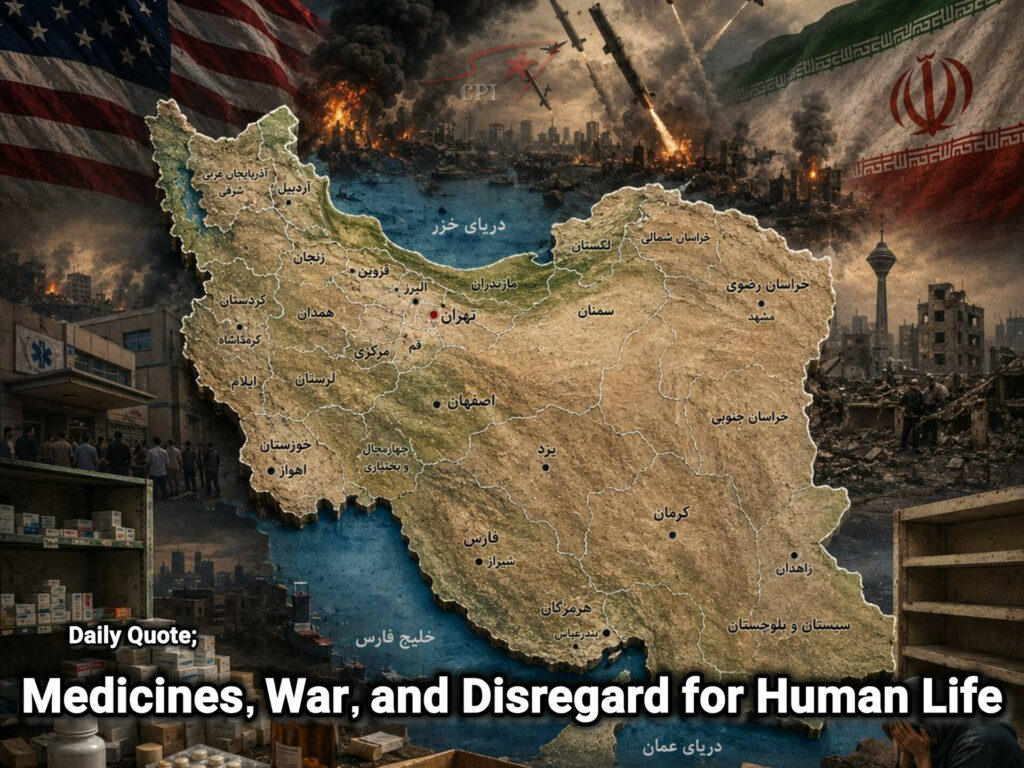
The pharmaceutical crisis in Iran is a clear indication of a system that has taken people’s lives and health hostage. Under the shadow of a war whose burden falls primarily on Iran’s poorest citizens, the country’s pharmaceutical market is struggling with three simultaneous crises: soaring prices, shortages of essential medicines, and the inability of health insurance to provide meaningful coverage for treatment costs. Each of these crises is catastrophic on its own; together, they portray a political system willing to sacrifice the lives of its citizens for its own survival.
Official figures themselves provide the strongest evidence. Iran’s Food and Drug Administration has announced that since the beginning of the year, the prices of more than 1,000 medicines have changed, with an average increase of nearly 48 percent. The true scale of the disaster, however, is most visible in medicines for patients with serious illnesses. Some life-saving drugs used for kidney transplants, bone marrow transplants, and cancer treatment have increased in price by 10 to 20 times. These increases are the direct result of the government’s changes to its foreign exchange policy, implemented without regard for the consequences for vulnerable patients.
The recent war and its consequences have dangerously intensified this crisis. Dozens of pharmaceutical and medical equipment companies, along with nearly 50 pharmacies, were damaged during the previous round of fighting. Transportation restrictions, difficulties in transferring foreign currency, and the refusal of foreign banks and companies to conduct transactions with Iran “even for goods that are not officially subject to sanctions” have further narrowed the country’s pharmaceutical supply chain.
A particularly tragic example can be seen in the situation of hemophilia patients in Khuzestan. Nearly 800 patients suffering from blood clotting disorders have reportedly gone months without receiving the medicines they need, forcing medical centers to revert to treatment methods used four decades ago. Even a donated shipment from the World Federation of Hemophilia reportedly failed to reach the patients. At this point, the issue is no longer merely about economics or sanctions; it is about human lives that carry little weight in the government’s calculations of war and peace.
Even more alarming is the conduct of the authorities themselves. While the Foundation for Special Diseases has warned that the prices of essential medicines have risen ten to twentyfold, the head of the Food and Drug Administration has attempted to downplay the severity of the crisis by relying on a narrow, technical definition of a “medicine shortage.” The agency itself acknowledges that hospitals burdened by debt cannot afford to purchase medicines, even when they remain available within the distribution network.
The crisis in the health insurance system forms another link in the same chain of injustice. According to estimates by the chairman of the Parliamentary Health Commission, direct out-of-pocket payments now account for 55 to 70 percent of healthcare costs. These figures clearly demonstrate that the primary financial burden of medical treatment falls on workers and wage earners rather than on a state that controls the country’s wealth and the product of workers’ labor. In many provinces, patients with chronic and life-threatening illnesses must pay the full cost of their medicines upfront and then endure long waits for partial reimbursement from insurance providers. In practice, healthcare has become a class privilege: those who can afford treatment survive; those who cannot are left to suffer or die.
The connection between these crises and the government’s broader policies is not accidental. Approximately 70 percent of the final price of medicines is influenced by general inflation and the free-market exchange rate, both of which are themselves direct consequences of government economic policies, regional militarization, and the authorities’ insistence on pursuing confrontations whose costs are borne primarily by workers and the poorest segments of society. War, sanctions, and economic mismanagement form the three sides of a triangle whose center is the preservation of political power.
Behind these figures and reports lies a crisis that directly threatens the lives and health of millions. Patients whose medicines are available but financially out of reach, insurance systems that exist largely on paper, and hospitals unable to dispense medicines because of unpaid debts all reveal different dimensions of the same emergency. In many hospitals, some prescribed medicines are reportedly removed from patients’ prescriptions altogether or their dosages are reduced without medical justification.
Ultimately, Iran’s pharmaceutical crisis exposes the true priorities of a system willing to shift every burden onto workers, patients, and the poorest members of society in order to preserve its power. It is a system that is prepared to sacrifice even the life-saving medicine of a seriously ill child or a diabetic worker to serve its fundamentally reactionary priorities. Until those priorities change, the list of preventable illnesses and deaths will continue to grow.