The Heavy Cost of War on the Working People of Iran
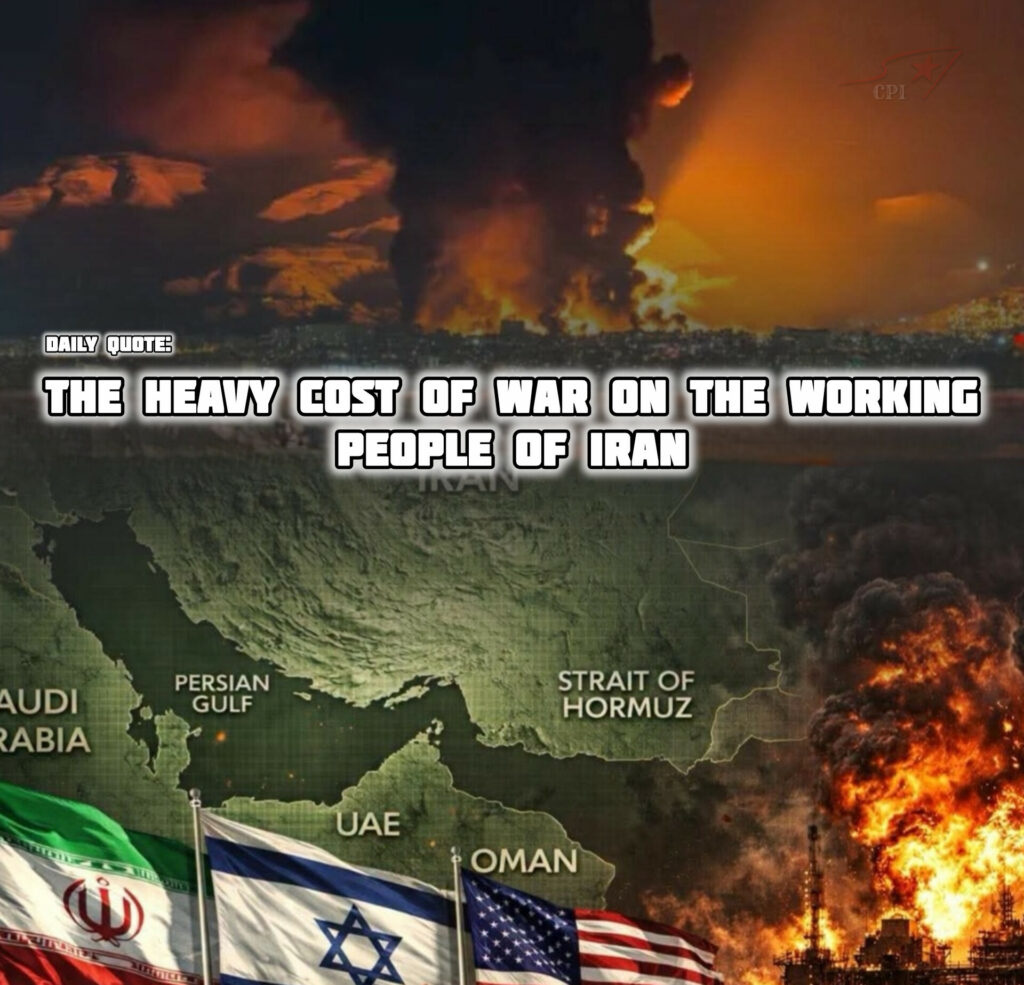
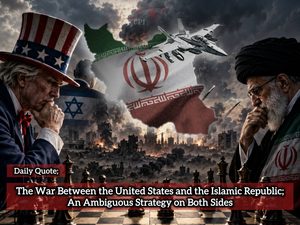
As the roar of missiles and the flight of drones have taken over the skies of Iran and the region, for a population of whom 70 percent were already living below the poverty line before this war, this military confrontation has created a humanitarian and economic catastrophe of unprecedented proportions. The extensive attacks by the U.S. military on Iran’s southern provinces and the Islamic Republic’s missile responses targeting the Kurdistan Region and the Persian Gulf countries have directly affected the already meager livelihoods of ordinary people. Contrary to the government’s official narrative, which describes it as a “national honor” and “sacred defense,” this war has in practice brought nothing but a dramatic intensification of the suffering of the working class and laboring people, a class that bears the overwhelming burden of all its consequences.
Iran’s economy, which had already been gasping for breath beneath years of sanctions and deeply rooted internal corruption before these hostilities, is now moving toward complete collapse under the shock of war. The recent military attacks have targeted not only defense facilities but also the country’s productive infrastructure. Many large factories and small manufacturing workshops have effectively been forced to shut down because of physical destruction or disruptions in the supply chain for raw materials. Workers who had endured years of wages below the poverty line and inadequate social insurance have now lost even those unstable jobs.
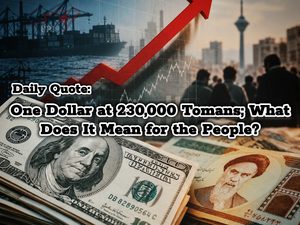
According to official statistics, consumer prices in July 2026 increased by 88.6 percent compared with the previous year. The price of basic goods such as eggs rose by 40 percent during the first few days of the conflict alone. The International Monetary Fund has projected that Iran’s gross domestic product will shrink by more than 5.4 percent this year, a figure that, in everyday reality, manifests itself as absolute poverty. Today, only 3 percent of Iranian households can afford a complete and nutritionally recommended food basket. Meat has become a luxury item, and buying food on credit from bakeries and grocery stores has become the only survival strategy for millions of Iranians. In many working-class neighborhoods on the outskirts of cities, the long lines for subsidized goods are now facing shortages even of these limited supplies, a shortage rooted in the breakdown of transportation and distribution networks under wartime conditions.
The increased pressure on working-class households must also be viewed alongside the housing crisis. Housing rents, which had already reached unbearable levels before the war, have surged once again as internal displacement from the border regions and the south has driven people into major cities. Families who lost their homes to bombardment are now forced to rent housing at several times the previous cost, while the government has offered no clear plan for their accommodation or compensation.
With the targeting of Iran’s main ports and the naval blockade of the country’s harbors, Iranian oil exports through the Strait of Hormuz have fallen to nearly zero. This blockade has severed the country’s main source of foreign currency. Reduced oil revenues have led to the rapid collapse of the national currency and, consequently, a dramatic increase in the cost of importing medicine, industrial components, and essential goods. Shortages of specialized medicines, particularly for cancer and kidney patients, have now become a humanitarian crisis. Private pharmacies, which had already struggled with currency fluctuations, now either have empty shelves or sell medicines at several times their normal price on the black market. Economic experts warn that this trend will not only drive inflation to astronomical levels but will also eliminate at least 2 to 3 million jobs in the short term.
Among all the affected sectors, the situation in the southern provinces and the livelihoods of coastal communities stand as a symbol of the brutality of this war against civilians. Reports from Bandar Abbas, Asaluyeh, and other southern cities indicate that hundreds of fishing boats have been destroyed in the recent attacks. For a fisherman in southern Iran, a boat represents his entire livelihood and the primary source of income for several families, purchased through years of savings and bank loans. Many of these loans have not yet been repaid, and fishermen must now continue making loan payments without any source of income for boats that no longer exist.
The destruction of a single fishing boat triggers a chain reaction of unemployment and poverty: from the captain and crew to net makers, repair workers, and fish vendors, everyone suddenly loses their livelihood. In regions that were already struggling with water shortages, power outages, and industrial pollution before the war, insecurity at sea has delivered the final blow to the fragile local economy. Rising operating costs for cargo vessels and unsafe maritime routes have caused even basic imported goods to reach consumers at exorbitant prices. For the fisherman whose boat has burned or whose dock has been destroyed, the war has entered the deepest parts of his life through the hunger of his children and the burden of his bank debts.
Women workers and female heads of households are facing even greater hardship. Many of the informal jobs in which working women were employed (from home-based sewing to work in small handicraft and food production workshops) have become the first victims of the wartime economic recession, as production facilities have closed and consumers’ purchasing power has declined. Child workers, who already formed a growing population on the streets of Iran’s major cities before the war, are now seeing even more children their own age joining them as family poverty deepens.
Experience has shown that in wartime conditions, the legitimate demands of workers, retirees, and laborers are pushed aside. The regime exploits the “state of emergency” to suppress any protest under the accusation of “treason during wartime.” Independent labor organizations, which were already under security pressure before the war, are now facing even harsher repression under the pretext of the country’s “emergency conditions.” The reality is that the Islamic Republic’s military adventurism in the region has targeted the livelihoods of the Iranian people long before it has posed a threat to its enemies.
The only way out of this cycle of misery is to put an end to the warmongering policies that seek their own survival through the destruction of people’s daily lives. Progressive forces and the working class must declare that they want neither war nor dictatorship, because in either case it is the working people who become the primary victims on the altar of power. Independent labor and class organization, together with solidarity among workers, teachers, nurses, and retirees across Iran, is the only shield capable of defending the interests of the working majority against this growing wave of poverty and repression.