Afghan Women Against the Darkness of Taliban Rule
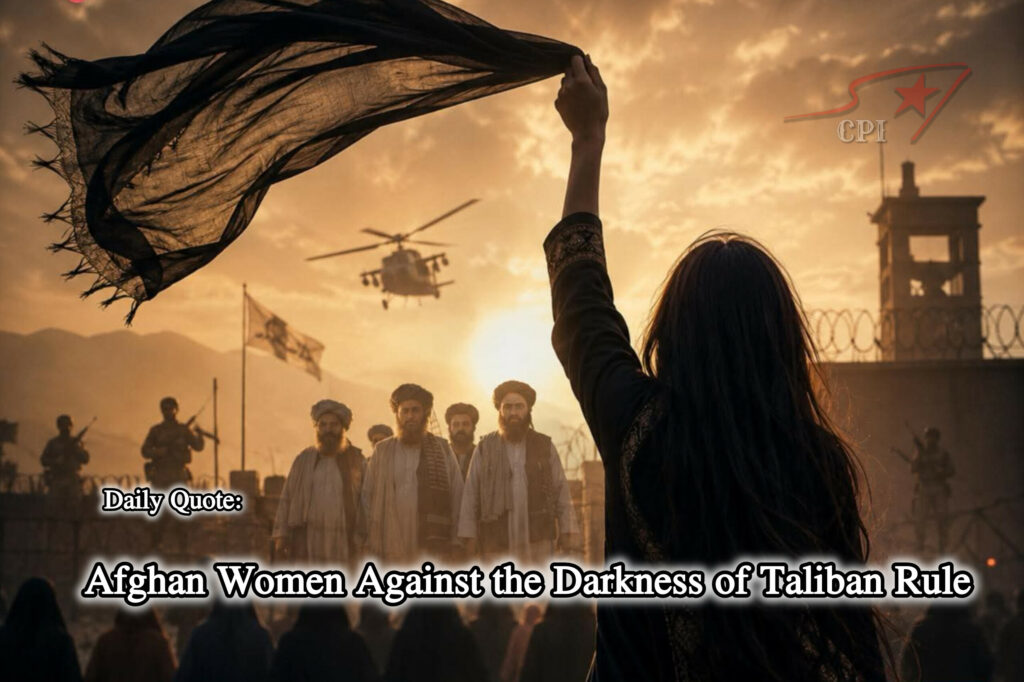
On June 9, 2026, the streets of Herat once again became a scene that reminded the world what has happened to half of Afghanistan’s population. Hundreds of people gathered in the Jebrail area of Herat to protest the arrest of women and girls accused of “improper hijab.” The Taliban responded in the only language it truly knows: the language of bullets. At least one person was killed, several others were injured, and dozens of women and men were arrested.
But what unfolded in the streets of Herat was, in reality, a confrontation between two worldviews: on one side, a system that seeks its survival through the absolute submission of women and their erasure from public life; and on the other, human beings who, even under the darkest conditions, refuse to surrender their right to live.
Since the Taliban regained control of Afghanistan in August 2021, women have gradually been pushed out of every sphere of social life. Girls’ schools were shut down. Universities closed their doors to women. The right to work was stripped away. Severe restrictions on movement were imposed. The enforcement of compulsory dress codes was pursued through the harshest methods possible. The Ministry for the “Promotion of Virtue and Prevention of Vice” became the executive arm of this gradual erasure.
These policies and actions form the foundations of a social order in which women are denied independent existence and free will. It is an order that views women as the property of the family rather than as free human beings. More importantly, the oppression of Afghan women does not stem solely from religious ideology. It is deeply intertwined with economic, class, and political relations. The very women denied education and employment are also those who bear the main burden of caring for children, the elderly and the sick, without this enormous social labor ever being recognized. In a society where millions struggle with poverty, unemployment, and insecurity, the first victims are always working-class and impoverished women. Depriving women of economic independence condemns them to total dependence on men, and this dependency becomes one of the most effective tools of social control in the hands of the ruling power.
The deprivation of women’s economic independence condemns them to absolute material dependence on men, whether fathers, husbands, or brothers. This economic dependency serves as one of the regime’s most effective instruments of social control. A woman without independent income has neither the means to escape domestic violence nor the power to organize civil resistance. In this way, the systematic impoverishment of women becomes a mechanism for suppressing their revolutionary potential.
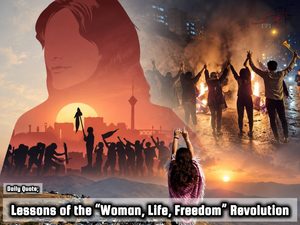
In this context, the experience of Iran offers an important source of inspiration that should not be overlooked. In the autumn of 2022, following the killing of Jina Amini by the morality police, the “Woman, Life, Freedom” movement spread across Iran. Iranian women burned their headscarves in the streets. The Islamic Republic unleashed its entire machinery of repression “street killings, executions, imprisonment, and horrific torture” but failed to extinguish the flames of civil disobedience. Although the Islamic Republic never officially abolished compulsory hijab laws, in practice it was forced to retreat. Today, in the streets of Tehran, Isfahan, Shiraz, and many other cities, countless women move freely without compulsory hijab. Reactionary forces were forced into retreat by the resistance of militant women. This experience demonstrated that even the most rigid religious regimes cannot withstand the collective will of women when that will is transformed into organized and persistent resistance.
Of course, these two experiences should not be treated as identical. Yet the fundamental message is the same: repression cannot extinguish the will to live forever. What makes the protests in Herat especially significant lies in several factors. First, open protest against the Taliban in Afghanistan is an extremely rare phenomenon. In an atmosphere dominated by fear, where the cost of resistance can be one’s life, simply taking to the streets is itself an act of courage. Second, these protests were not carried out by women alone. Men, young people, and entire families also joined. This indicates that opposition to Taliban policies has gone beyond the realm of a “women’s issue” and become a broader social issue. Third, Herat has traditionally been one of Afghanistan’s most open and culturally vibrant cities, a city with a long historical tradition of knowledge, art, and trade. The uprising of its people therefore carries profound symbolic significance.
But the struggle of Afghan women cannot be reduced merely to the question of clothing. They are fighting for the right to education, the right to work, the right to exist in society, and the right to participate in shaping the future of their country. They are fighting for the right to live as free and equal human beings. This is a struggle for the right to education, for reopening the closed doors that condemn a new generation of girls to absolute illiteracy. It is a struggle for the right to work, to escape the grip of imposed poverty and achieve economic independence. It is a struggle for political participation and decision-making, for active involvement in determining the future of the country and ending the monopolistic male domination of the Taliban. In truth, this is a struggle to reclaim stolen humanity. A full-scale battle to live as free, equal citizens with control over their own destiny. Afghan women, as they demonstrated in Herat, are not merely silent victims of history. They are part of a force capable of shaping a different future.