The Struggle for Bread in Southern Iran Has Become Inseparable from the Struggle for Survival
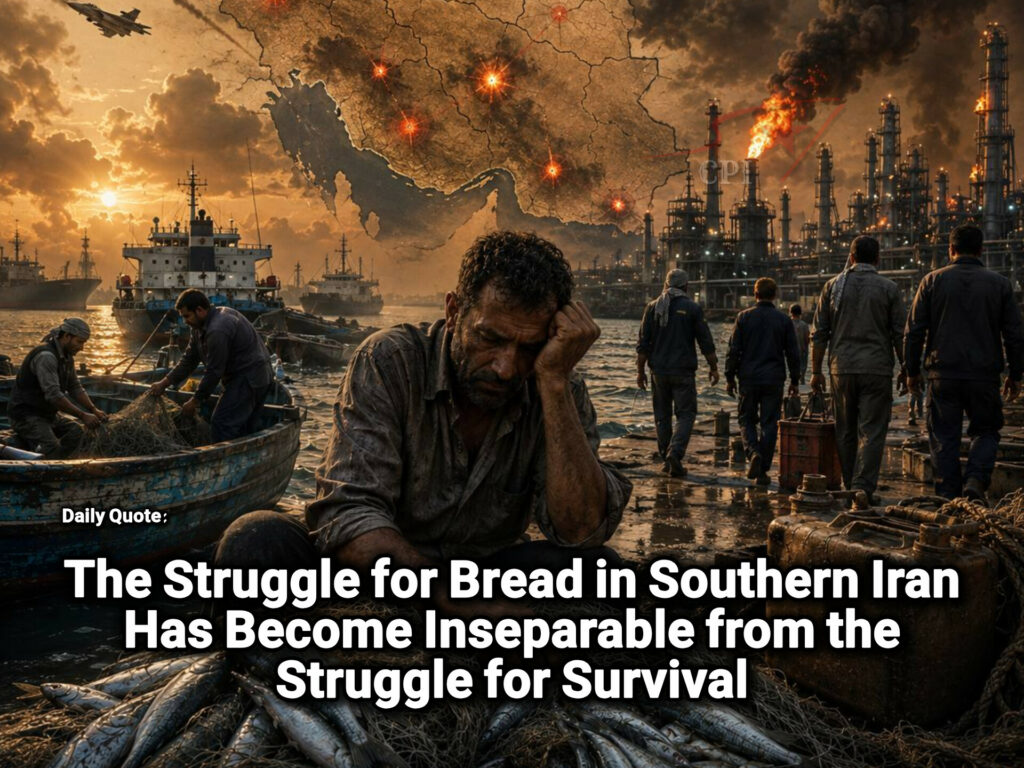
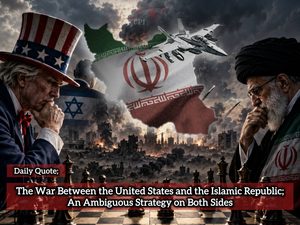
The ongoing war between the United States and the Islamic Republic, which has been concentrated on ports, oil refineries, and control of the Strait of Hormuz in Iran’s southern provinces, has placed its heaviest burden first and foremost on the workers, sailors, and fishermen whose entire livelihoods are tied to this region. While official narratives focus on military rhetoric from both sides, the Persian Gulf and the Gulf of Oman have become battlefields where working people are forced each day to choose between death and hunger in order to earn a living.
Although attacks targeting ports, docks, and fishing boats in the provinces of Hormozgan, Khuzestan, and Sistan and Baluchestan intensified dramatically during July 2026, the reality is that this nightmare for the southern working class began in the earliest days of the war in March 2026. Workers at the petrochemical complexes of Mahshahr and Bandar Imam were among the first victims, losing their lives when refineries became targets. In Asaluyeh and South Pars, workers continued their struggle for survival under the constant threat of missiles and drones throughout the following months.
The destruction of refineries and oil facilities was followed, after temporary pauses in the attacks, by waves of layoffs and unemployment. Field reports indicate that industrial complexes in southern Iran are now operating at, at best, 30 percent of their capacity. This sharp decline has meant the complete elimination of overtime pay and employment benefits, the very income that enables workers, most of whom are employed through subcontractors or temporary contracts on minimum wages, to survive. For workers whose earnings had already failed to keep pace with inflation, the loss of these benefits has meant a direct descent into extreme poverty.
Among the various groups of working people in the south, the situation of fishermen and sailors in the Persian Gulf and the Gulf of Oman has reached an indescribably critical point. Since March 2026, their wooden boats and fishing vessels have repeatedly been targeted by bombings and direct fire, with dozens of vessels sunk. Yet media attention to their plight has been sporadic and limited to reports of wartime incidents, without addressing the deeper and long-standing deprivation of their rights.
Even before the outbreak of war, fishermen were deprived of the most basic labor protections. They lacked effective insurance, job security, and incomes proportionate to the hardships of working in temperatures exceeding 50°C. Under the most optimistic circumstances, the earnings of an ordinary fisherman or sailor barely reached the legal minimum wage.
Alongside the dangers posed by naval gunfire and military insecurity, fuel shortages have imposed an additional burden. As reported by ILNA: “The government’s fuel allocation for fishing vessels does not even last half a month. Fishermen are forced to pay brokers between 2 and 3 million tomans for just 20 to 30 liters of gasoline sold on the open market.”
This enormous expense is imposed on workers whose livelihoods depend entirely on weather conditions and the uncertainty of the daily catch, with no guarantee of income.
When fishermen in Hormozgan and Sistan and Baluchestan are asked why they continue to go to sea despite the direct threat of missiles, their answer captures the essence of working-class existence: “The sea is dangerous, but not working is more dangerous than missiles. Hunger is more dangerous. Leaving our boat at the dock is more dangerous.”
The deprivation experienced by fishing communities (from Chabahar and the open waters of the Gulf of Oman to the shallow waterways of the Arvand River and Bahmanshir in Khuzestan) reveals a common pattern of exploitation. In Chabahar, warships sink fishing vessels; in Khuzestan, bureaucratic structures, anti-labor regulations, and years of accumulated discrimination drive local fishermen toward ruin. On one side, fishermen in Sistan and Baluchestan must travel as far as the equator in search of fish while exhausting their fuel quotas. On the other, native youth in Khuzestan are often denied even basic fishing permits and are forced to purchase fuel at black-market prices.
Although the legal minimum monthly wage has been set at approximately 22 to 23 million tomans, the income of an ordinary sailor in Khuzestan often fails to reach even 20 million tomans. Furthermore, fishermen in the province are permitted to work at sea for only 21 days each month, spending the remaining days repairing and maintaining their equipment without any income. These severe financial pressures have pushed even small boat owners into crushing debt.
The people who have endured years of suffocating heat and humidity, who have lived with repeated power outages, water shortages, and industrial pollution while keeping Iran’s oil and energy industries running on wages below the poverty line, are not surprised by war or missiles. War, despite all its destruction, has merely added another dimension to the daily struggle these communities have long fought simply to stay alive.
The Islamic Republic’s militarization on one hand and the bombing campaign by the United States military on the other, combined with the complete absence of labor rights, job insecurity, and deepening economic hardship, have created a double-edged threat directed at the lives and livelihoods of southern Iran’s workers and fishing communities.
Today, more than ever, the struggle for bread in southern Iran has become inseparable from the struggle for survival.