International Youth Day and the State of Young People in Iran
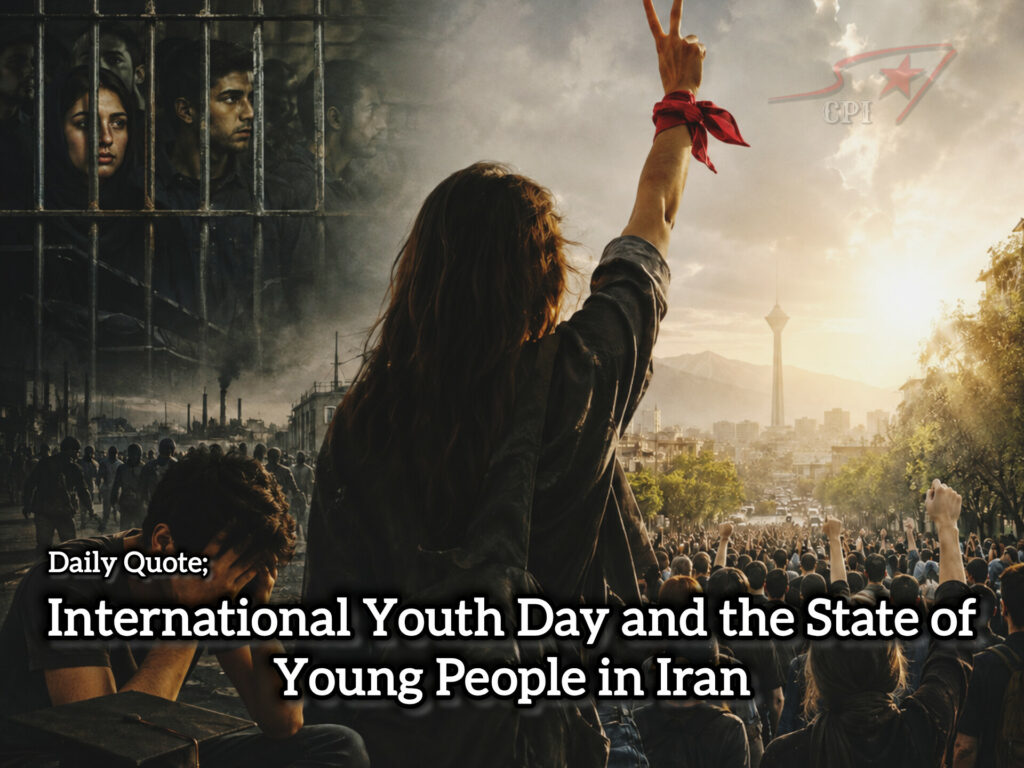
August 12, corresponding to 2 August, is International Youth Day. The United Nations General Assembly declared this day International Youth Day on December 17, 1999. Although such an occasion has so far done little to resolve the problems facing young people, particularly in countries on the periphery of capitalism, it at least provides an opportunity to address the situation of young people in a country like Iran; a country where, under the shadow of an authoritarian and anti-freedom regime, a large part of its human and social capital is being led astray.
Iranian society has a relatively young population compared with much of the world. Young people between the ages of 15 and 30 account for nearly 36 million of the country’s population, of whom around 14 million have university-level education. Yet this high proportion of young and educated people is accompanied by an equally high level of deprivation and social harm affecting this section of society.
One of the most important and painful challenges facing young people in Iran is widespread unemployment, which has particularly affected university graduates. Despite the heavy investment families make in their children’s education, a significant proportion of university graduates face an inadequate labor market and limited employment opportunities. According to semi-official statistics, unemployment among educated young people in Iran has exceeded 50 percent. Even news agencies close to the authorities, including Tasnim, have acknowledged the reality that university graduates’ inability to find employment related to their fields of study has pushed them toward readily available jobs such as street vending.
If families once believed that sending their children to university would enable them to obtain suitable employment in the future, today they see that not only has this goal failed to materialize, but university education itself has become an obstacle to finding work. A young person who, with a thousand hopes and aspirations, after overcoming dozens of obstacles placed in their path by the regime or by severe material poverty, finally obtains a diploma from high school, a technical school, or a university, and after wasting two years of their life in compulsory military service for this regime, still has no hope of finding a job worthy of their qualifications, sees all their dreams slipping away.
What can the life of a young person who, because of unemployment and the lack of an independent source of income, considers themselves a burden on their family and is not even able to afford the costs of marriage and starting a family, be like? In Iran under the rule of the Islamic Republic, young people neither enjoy the vitality and enthusiasm of youth nor have opportunities to develop their abilities and talents. It is hardly surprising that under such conditions, anxiety, depression, and psychological disorders have increased significantly among them, leaving many exposed to painful social harms, including addiction. More than one million people addicted to narcotic drugs in Iran are under the age of 18, and the average age at which addiction begins has fallen to 13; a figure that alone bears witness to the depth of the catastrophe that the Islamic regime has brought upon the younger generation of this country.
It must also be emphasized that although young people in Iran share common problems because of the rule of a reactionary and anti-freedom regime, their suffering and hardships are not the same because they belong to different social classes. Clearly, the problems facing young people from the working class and the impoverished and low-income sections of society differ from those of young people who have the protective shelter of a prosperous family. Yet the young person whose talents have been shackled by a reactionary regime, the young person who has spent the best years of their life at school, high school, and university under the pressure of anti-scientific and reactionary education, the young person who has even been denied the freedom to choose what to wear, the girls who are not allowed to watch sporting events, and the young person who is imprisoned and tortured for the slightest protest against political and social issues, all share a common pain with the young people of the working and laboring classes. The liberation of this vast majority from the inhumane conditions imposed upon them is possible only through solidarity with the struggles of the working class; a class whose liberation from the Islamic regime and the existing relations of exploitation will also transform the fate of Iran’s young people.
The picture of young people’s lives in Iran cannot be complete without emphasizing one hopeful reality that can be seen alongside all these hardships. During nearly half a century of rule, the Islamic regime has implemented numerous projects aimed at controlling the bodies and minds of young people, but all these projects have burst like bubbles in the face of society’s forward-moving wave. In fact, all the regime’s investment in this area over the past 46 years has gone to waste. For this reason, the regime is constantly preparing to take revenge on young people whom it failed, during their school and high-school years, to mold according to its own model into narrow-minded, submissive, and weak-willed individuals.
Although a vast section of Iran’s young people are unemployed and deprived of even the most basic opportunities to enjoy the natural benefits of youth, they have not surrendered to the existing situation and have embarked on the path of struggle against this regime. In various ways, they have resisted the existing conditions and found new ways to express their demands; a resistance that is visible not only in street protests, but also in their culture, art, literature, and even their everyday way of life.
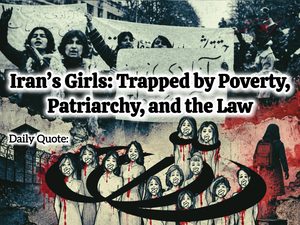
The height of this resistance was seen in the “Woman, Life, Freedom” uprising in the autumn of 2022; an uprising that demonstrated that Iran’s younger generation does not accept the existing situation. Young people and adolescents took to the streets throughout the country with courage and self-sacrifice, demanding fundamental changes. This uprising demonstrated that Iran’s young people possess latent capacities and considerable social potential for change. The reality is that despite all the hardships and repression, the spirit of resistance among Iran’s youth remains alive. They have rejected the way of life imposed upon them by the Islamic Republic and pushed back against the dominant culture; in cyberspace, at universities, in neighborhoods, and even within their own families, young people are creatively and diversely redefining the culture of society.
On such a day, remembering the situation of Iran’s young people is not a ceremonial observance, but a call for solidarity with a generation that, despite unemployment, poverty, repression, and widespread social harms, continues to keep the hope of change alive. The liberation of this generation cannot be separated from the liberation of Iran’s working class from the yoke of exploitation and despotism; and the solidarity of young people with this struggle is a path that the historical experience of Iran over recent decades has repeatedly demonstrated.