The End of the War, the Beginning of Clearer Political Divisions
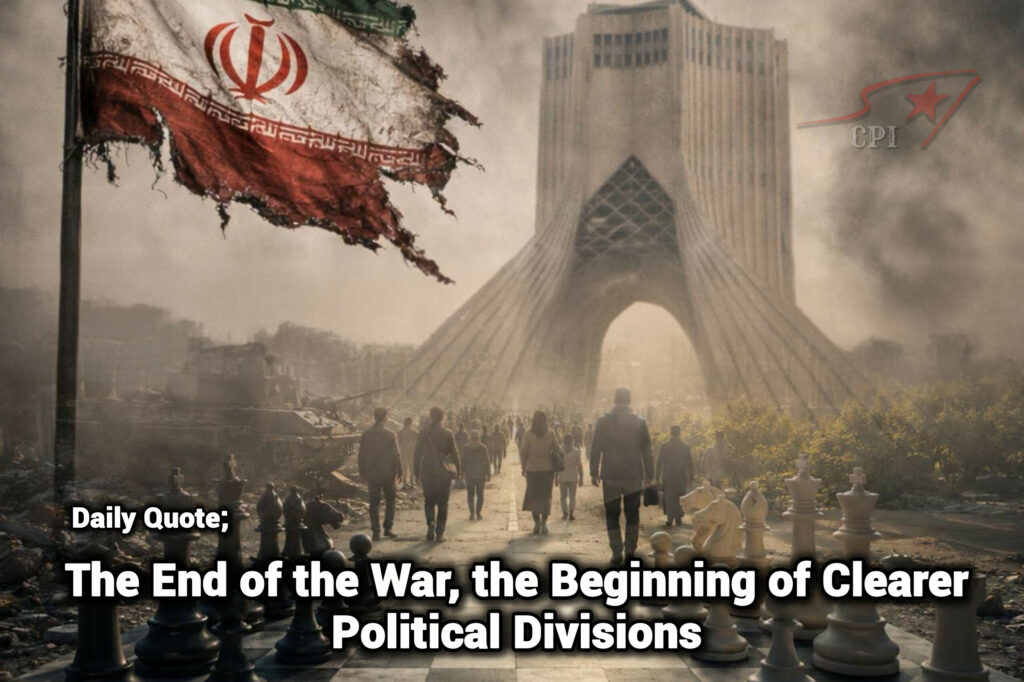
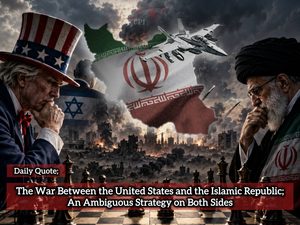
The publication of the 14-point agreement between the United States and the Islamic Republic of Iran, which is scheduled to be formally signed by representatives of both sides in Geneva on Friday, marks a significant turning point in the recent crisis involving Iran and the region.
On the surface, the agreement brings the military phase of the conflict between the United States, Israel, and Iran to an end. Politically, however, it carries implications that go far beyond a ceasefire or the regulation of security relations. The document suggests that a war launched under slogans such as “changing behavior,” “containing threats,” “disarmament,” and in some narratives even “opening a path to freedom for the people of Iran,” has ultimately resulted in an agreement that, above all else, guarantees the survival of the Islamic Republic and reinforces its position vis-à-vis the West.
As far as the United States is concerned, the agreement amounts to little more than a return to the pre-war status quo: keeping the Strait of Hormuz open, ensuring the free flow of regional oil and gas to global markets, and restoring relative stability to energy routes. In practice, the United States seeks the reestablishment of the economic and geopolitical order that existed before the war, one in which the region’s oil and gas were exported without major disruption and the Strait of Hormuz remained one of the world’s most critical economic arteries.
On the other side, the Islamic Republic appears to have gained more substantial advantages. A regime that, for the past forty-seven years, has sought to impose recognition of its existence upon the West and the United States can now claim not only to have survived the war but also to have compelled its adversaries to acknowledge its legitimacy. For the Islamic Republic, survival in the face of American military, political, and economic pressure has always been considered a form of victory.
The Geneva agreement provides the government with an opportunity to portray the war domestically as a “defeat of the enemy” and the agreement itself as a “confirmation of the regime’s strength and authority.”
Perhaps the most significant political aspect of the agreement is that the policy commonly referred to as “regime change” is effectively and formally removed from the agenda. The United States has reportedly committed itself to refraining from interference in Iran’s internal affairs. Even if this commitment is subject to varying interpretations in practice, it carries substantial symbolic significance for the Islamic Republic. A government that has consistently attributed domestic protests to “foreign interference” now possesses a document it can present as evidence of an American retreat from any policy aimed at overthrowing the regime.
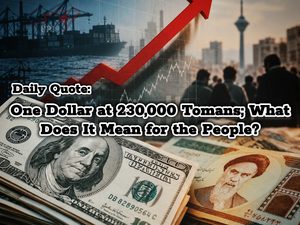
In addition, the agreement reportedly includes certain economic concessions, including the easing of some sanctions, the reopening of channels for oil exports, and access to financial resources. For a government facing economic crisis, budget deficits, inflation, and widespread public dissatisfaction, such concessions are of critical importance. Even limited improvements in oil sales could provide financial breathing room, strengthen networks loyal to the regime, and help rebuild its mechanisms of control.
At the same time, some of the economic provisions appear to have been included more for appearance than for clear practical implementation. One notable example is the proposal for a $300 billion reconstruction fund for war-related damage. Fundamental questions remain unanswered: Where will this fund come from? Which institutions will oversee it? What share will be allocated to ordinary people and public infrastructure? Will these resources actually be spent on rebuilding hospitals, schools, water and electricity networks, transportation systems, and destroyed homes, or will they be diverted into familiar channels of corruption, patronage, military institutions, and government-controlled foundations?
The experience of the Islamic Republic over the past four decades offers little basis for optimism. Iran’s bureaucratic and economic structures are widely criticized for corruption, lack of transparency, and dependence on patronage networks. Even if new financial resources become available, there is no guarantee that they will lead to economic development, public welfare, or genuine reconstruction. On the contrary, there is a strong possibility that a substantial portion of these resources would be directed toward rebuilding military capabilities, strengthening security institutions, financing loyal networks, and expanding financial and administrative corruption.
The central question therefore remains: Will the benefits of this agreement improve the lives of ordinary people, or will they once again be absorbed by the Islamic Republic’s military, security, and propaganda apparatus? Experience suggests that in the absence of political freedom, public oversight, independent labor organizations, and a free press, no lasting economic opening can truly benefit society. Oil revenues, sanctions relief, and newly accessible resources, if managed through the existing structure, may strengthen the state’s repressive capacity long before they improve living conditions for the population.
The agreement also represents a significant setback for a segment of the right-wing opposition that for years promoted sanctions, external pressure, and military intervention as the path to Iran’s liberation. The recent war demonstrated that bombing does not automatically produce freedom or democracy. Its outcome was neither the collapse of the Islamic Republic nor the empowerment of the people, but rather a more damaged country, a poorer society, weakened infrastructure, and a government that can now portray its survival as a victory.
The end of the war marks the beginning of a clearer political landscape. On one side stands the Islamic Republic, which uses even destruction as a means of consolidating power. On the other stands a segment of the right-wing opposition that equated liberation with devastation and has now been discredited by events. Between these two forces stand the people of Iran; people who seek freedom, bread, and security, and who reject both foreign war and domestic authoritarianism.