Trump and Xi Jinping’s Meeting and the Fate of the Iran–US War
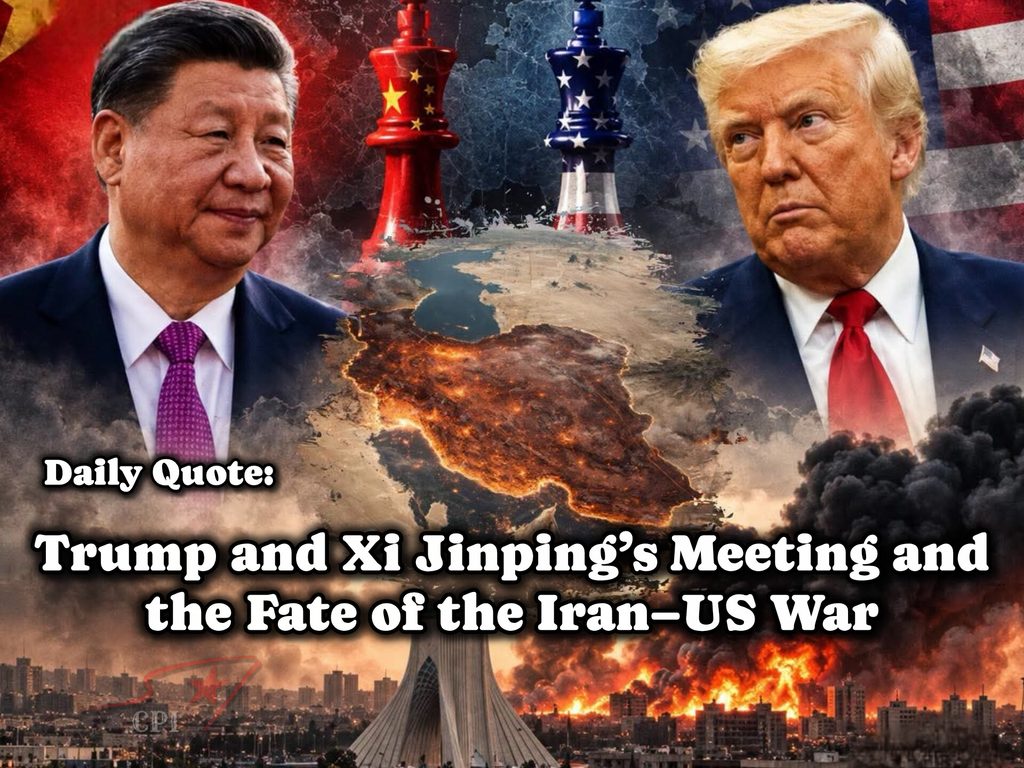
Donald Trump and Xi Jinping’s meeting on Wednesday in Washington, contrary to some optimistic interpretations, did not put an end to the disagreements between the United States and China. The meeting, which took place in a relatively friendly atmosphere, rather indicated that the rivalry between the world’s two great powers has entered a new phase; a phase in which trade disputes, competition over technology and artificial intelligence, the long-standing tensions over Taiwan, and now the Iran–US war together constitute the main axes of the challenge between Washington and Beijing. During the meeting, Trump once again postponed the arming of Taiwan, while Xi Jinping asked Trump to keep the rivalry between the two countries within limited bounds, rather than turning it into a battle in which one side must be the absolute loser.
Published reports indicate that no specific achievement regarding Iran emerged from the meeting; and this comes while the Iran–US war, which began on February 28, 2026, with US and Israeli attacks and the killing of Ali Khamenei, remains one of the world’s most important geopolitical crises.
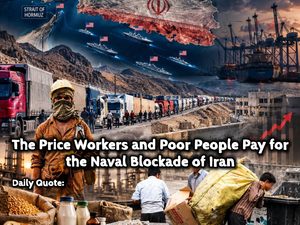
The closure of the Strait of Hormuz, widespread disruption to global trade, the collapse of the first ceasefire brokered by Pakistan, and the naval blockade of Iran are only a small part of the consequences of this war. The June 17 agreement between Trump and Masoud Pezeshkian, which was supposed to bring an end to the war, also fell apart by August.
The reality is that Iran’s foreign policy has for years been based on an incompatible duality: an aggressive tone in official platforms, and behind-the-scenes negotiations for a “dignified” compromise. This duality is not a clever tactic, but rather a sign of confusion within the decision-making structure of the Islamic Republic; a structure divided among parallel institutions, conflicting commands, and factional interests, and incapable of producing a stable foreign policy.
Abbas Araghchi’s seven-day plan to end the war, which includes halting hostilities, releasing frozen assets, lifting oil sanctions, dismantling the blockade of the Strait of Hormuz, and beginning nuclear negotiations, is in fact an attempt to revive the June understanding; an understanding that the Islamic Republic discredited through provocative actions in the Strait of Hormuz.
Now, only one day after the US–China meeting, Iranian Foreign Minister Abbas Araghchi has presented a seven-day plan to end the war: a cessation of hostilities on all fronts, including Gaza and Lebanon, the release of Iran’s frozen assets worth at least $12 billion, the lifting of sanctions on oil exports, the dismantling of the blockade of the Strait of Hormuz and its full reopening on the final day, and the immediate beginning of nuclear negotiations. This plan is in fact an attempt to revive that same June understanding. However, US officials have stated that they will not “rush” into accepting an agreement. Two days before the Washington meeting, Pezeshkian had also stated explicitly in a speech at the United Nations that Iran would not surrender under military pressure or sanctions and would maintain its nuclear program; while at the same time, a three-hour meeting was held between Iranian and US officials on the sidelines of the United Nations, which Trump praised.
China has extensive economic relations with the Islamic Republic, is Iran’s largest oil buyer, and is one of Tehran’s most important trading partners. The Islamic Republic has sought for years to present this relationship as political backing, but China has never accepted such a role. China pursues its interests on two levels: on the one hand, it wants an end to tensions and the full reopening of the Strait of Hormuz, because energy security is vital to China’s economy; and on the other hand, it does not want its economic relations with Iran to become a casualty of US pressure. This duality explains why China, throughout this war, has called the US naval blockade “irresponsible and dangerous,” while at the same time playing a mediating role alongside Pakistan and putting forward its own five-point peace plan. The reality is that China, regarding Iran, is not a political ally, but rather an actor defending its own economic and geopolitical interests.
For the people of Iran, ending this war is an immediate necessity; but this ending cannot be the stopping point. Rebuilding people’s lives, reviving the devastated economy, achieving justice for the victims of war and repression, releasing political prisoners, equality for women, recognizing the rights of Iran’s peoples, and establishing a government accountable to and based on the democratic will of the people are needs that cannot be fulfilled merely by stopping the war.
The main question is not what concessions the United States obtained from China or what concessions China obtained from the United States; the main question is how the people of Iran can prevent their future from becoming a bargaining chip in the dealings of the global powers. The answer to this question must be sought in social organizing, independent workers’ organizations, women’s struggle for freedom, connecting universities with society, and the demand for truth and justice by grieving families, not in meetings of the leaders of the great powers in Washington or Beijing, and not in the promises of a government that has been losing public trust for years.