Massacre of Political Prisoners in 1988: The Second Stage, September, the Massacre of Communists
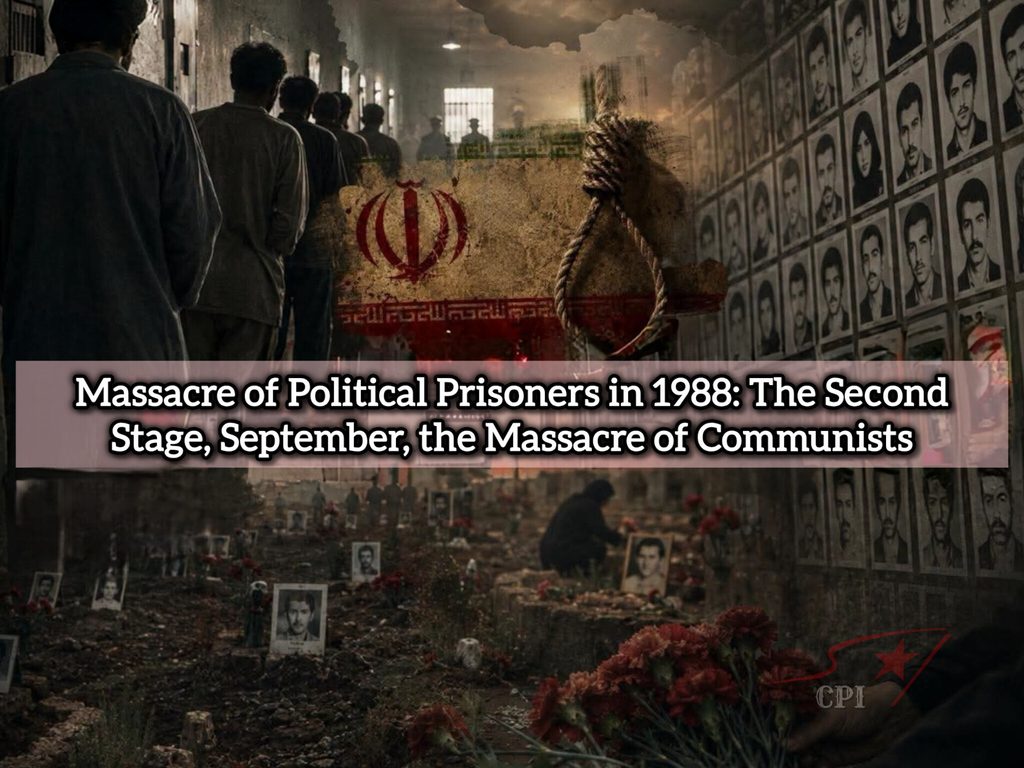
The summer of 1988 was one of the darkest periods in the history of the Islamic Republic of Iran. Following the acceptance of a ceasefire in the eight-year Iran-Iraq War and what Khomeini called “drinking the poisoned chalice,” the Islamic regime committed a horrific crime whose consequences, nearly four decades later, remain like a deep wound on the body of this society. The massacre was carried out in two stages: first, the killing of members and supporters of the People’s Mojahedin Organization of Iran in August, followed by the massacre of communists in September, which was equally brutal.
The end of the Iran-Iraq War with the defeat of the Islamic Republic opened a window of hope for the suffering people of Iran. People who had burned in the fires of war for eight years now hoped to resume normal lives and raise their human demands, which had been suppressed under the pretext of war. This public joy and the regime’s sense of defeat terrified the leaders of the Islamic Republic.
Khomeini and his principal advisers, Rafsanjani, Khamenei, and others, were aware that defeat in the war could create the conditions for popular uprisings against the government. They were determined to turn the people’s joy over the end of the war into mourning and grief. But they had no justification for massacring people in the streets and marketplaces. For this reason, as in the events of June 20, 1981, they once again wielded their poisoned sword inside the prisons and against political prisoners.
By issuing a religious decree, Khomeini appointed a committee that later became known as the “Death Committee” to carry out the mass execution of thousands of political prisoners. The massacre of political prisoners began in the first days of August 1988 with the execution of members and supporters of the People’s Mojahedin Organization of Iran. This stage continued throughout August and sent thousands to their deaths.
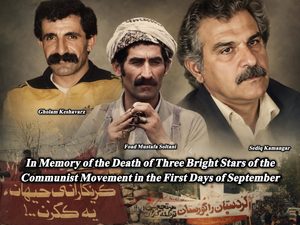
The first week of September marked the beginning of the second stage of the massacre of political prisoners. After the massacre of members and supporters of the Mojahedin was completed, the turn of the communists came. This stage of the massacre of communists held in various prisons across Iran took place during September. Many of these prisoners had already served their sentences and were awaiting release. Others had not even been formally charged, and the reasons for their detention remained unknown.
The Death Committee subjected communist prisoners to the same ideological interrogations used during the first stage. They were asked questions about their religious beliefs, their position toward the Islamic Republic, and their adherence to the principles of the Islamic regime. Those who refused to renounce their beliefs and were unwilling to repent and express remorse were sentenced to death.
Although the actual number of victims of this horrific crime was never officially disclosed, according to various reports, between 6,000 and 10,000 people were executed in total during the two stages of the massacres. The victims’ bodies were secretly buried at Khavaran in Tehran, Dar al-Rahma in Shiraz, Bagh-e Rezvan in Isfahan, the courtyard of the Revolutionary Court in Sanandaj, and dozens of other locations, in complete secrecy. The authorities called these cemeteries “Lanat-Abad” (“Cursed Land”) in order to keep people away from them. These places immediately became memorials to unforgettable loved ones and will undoubtedly, in the not-too-distant future, become gathering places for those devoted to humanity’s path toward liberation.
One of the most tragic aspects of this crime was the silence of the international community. European governments and the United States not only failed to protest the massacre, but by keeping it hidden, effectively gave it their stamp of approval. Western governments, which had adopted a policy of helping consolidate the rule of the Islamic regime, left the regime’s leaders free to carry out the massacre. The so-called free media of the imperialist powers also deliberately covered up the catastrophe.
Today, we commemorate the victims of the mass massacre of political prisoners in 1988 while the Islamic Republic is immersed in the deepest crises of its four-decade rule. The regime that, 38 years ago, believed that by spilling the blood of thousands of young fighters and revolutionaries it had permanently locked the chains of despotism around society’s voice is now itself trapped in deadly dead ends.
The nuclear project, which was being completed at the cost of billions of dollars taken from the fruits of the people’s suffering and labor, was reduced to ashes within a matter of days. The country’s economy is in a catastrophic state. The devastating war, the multilateral U.S. sanctions, the maritime blockade of Iranian ports, the collapse of oil sales, inefficiency, widespread corruption, and enormous military expenditures have pushed Iran’s economy toward destruction. Soaring inflation, the collapse of the national currency’s value, widespread unemployment, relentless price increases, low wages, shortages of water and electricity, environmental destruction, and the depletion of the country’s natural resources have turned the lives of tens of millions of Iranians into a nightmare. All of this has placed the regime in the worst position of its entire existence.
Despite the passage of 38 years since this crime, the movement seeking justice for the victims of the 1988 massacre continues. Annual memorial ceremonies, research efforts aimed at shedding light on the unknown dimensions of this catastrophe, and international campaigns all demonstrate that the memory of these loved ones remains alive. The memory of those who lost their lives in this massacre will always remain alive. The people of Iran will “neither forget nor forgive” the direct and indirect perpetrators of this crime. Until justice is established and the perpetrators of the massacre are brought to trial, the movement for justice will continue.
Today, nearly four decades later, seeking justice for these loved ones is no longer merely an emotional matter; it has become a practical and political necessity. The regime that believed it had secured its position in power by massacring these young people is now trembling. The day is not far when the leaders of the Islamic Republic will be tried before the court of justice of the Iranian people and receive the punishment they deserve.