Iran–U.S. Negotiations Are Stalled, but the Burden of the Crisis Falls on the People
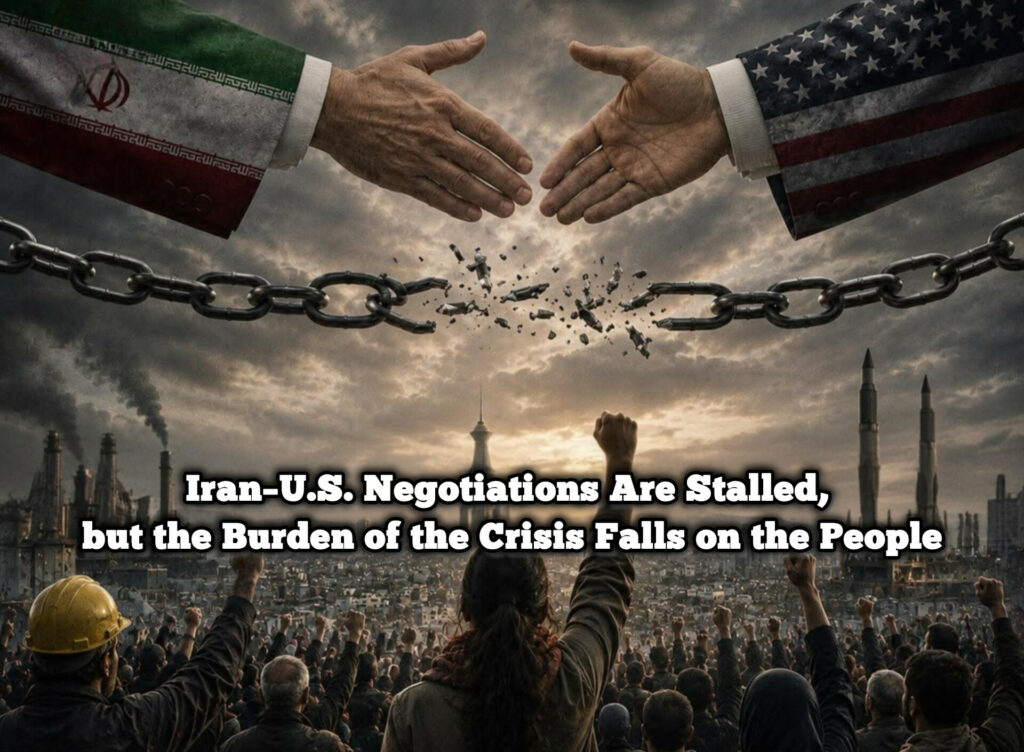
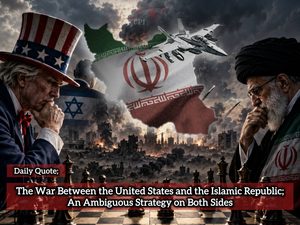
The negotiations between the Islamic Republic and the United States, which in recent weeks had been accompanied by a wave of optimism, have now entered an uncertain phase. For now, there is no sign of the agreement that was said might be finalized this week. It is still too early to speak of a complete deadlock, but it is equally clear that the initial optimism has faded. In the meantime, what matters most is the direct impact of this situation on the lives of workers, laborers, and the impoverished sectors of Iranian society. For this majority living under pressure, every day of delay in determining the fate of peace or war, every day of uncertainty regarding sanctions, and every day that high-level bargaining drags on means smaller dinner tables, more insecure lives, and a heavier burden of survival.
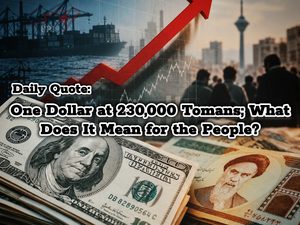
For the Islamic Republic, reaching an agreement is above all an urgent and vital economic necessity. A system that has been worn down for years by sanctions, chronic financial crises, budget deficits, the collapse of the national currency, and productive stagnation now needs an injection of financial resources more than ever. Billions of dollars of Iranian assets remain frozen abroad, and access to these resources has become a matter of economic and political survival for the government.
From the perspective of the people, however, the main question is not whether the government needs an agreement. The real question is this: if an agreement is reached and some of the frozen funds are released, who will benefit from those resources? The experience of the Iranian people provides a clear answer. One only has to look at the period following the 2015 nuclear agreement. At that time, some financial resources were released and the government gained a degree of economic breathing room. Yet for the majority of people, the result was neither a lasting improvement in living standards, nor a reduction in inequality, nor stronger public services. Class divisions did not diminish; they deepened. Meanwhile, numerous underground missile cities were built. Additional enrichment facilities were established. Security and repression apparatuses became more complex and expansive. More money flowed to proxy forces, while the share of workers and the poor remained inflation, low wages, unemployment, and job insecurity.
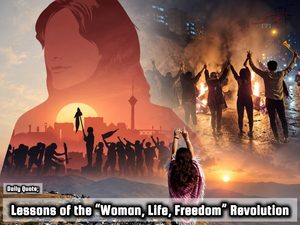
This time, the situation is different. The government itself understands this better than anyone: Iranian society stands on a foundation of deep and accumulated discontent. From 2009 to 2017, from 2019 to 2022 and the “Woman, Life, Freedom” uprising, to the January uprising of last year that was met with bloodshed, multiple waves of protest have swept across Iran. Each of these waves was suppressed, but the material and social conditions that gave rise to them remain alive. What remains is a society that has accumulated anger, memory, and experience. During the war and the current temporary ceasefire, for understandable reasons, large-scale street protests have subsided for now. But this does not mean dissatisfaction has disappeared. On the contrary, Iranian society resembles a powder keg whose potential for explosion the government understands all too well. This is why the Islamic Republic urgently needs financial resources, hoping to postpone an explosion of public anger through the payment of overdue wages, limited control of inflation, the provision of essential goods, and temporary market stabilization.
On the other side, the U.S. government and Trump himself also need a tangible achievement. To demonstrate success before domestic public opinion, opponents within the Republican Party, and significant pressure from Israel, Trump requires a “victory” he can present. In this context, the issue of the Strait of Hormuz and the possibility of securing safer passage for oil and trade has become one of the central elements of that narrative. Yet the Islamic Republic is not prepared to surrender its final leverage so easily. As a result, it has adopted a cautious dual-track policy: neither making so many concessions that it is left empty-handed nor creating enough tension to derail the entire process. This is the policy of “drip-feed concessions” offering limited compromises, buying time, and attempting to preserve at least some bargaining power.
Nevertheless, the formal and practical end of this destructive conflict, if and when it truly occurs, could create an opportunity for Iranian society. Not because an agreement would automatically bring prosperity and freedom, but because a reduction in war pressures and a lessening of the atmosphere of emergency could create more room for society to breathe and allow people to press their accumulated demands with greater force. Any opening in the public sphere, even if limited and temporary, can become a new arena for social pressure from below.
This is where the experience of Iran’s social movements becomes important. In recent years, Iranian society has not only experienced repression, it has also become more experienced. From workers’ strikes to nationwide protests, from the “Woman, Life, Freedom” movement to the struggles of teachers, nurses, retirees, and other wage earners, each wave of protest has left behind a generation that is more aware, more seasoned, and more experienced. These experiences have not disappeared. They have been recorded in the collective memory of society and now exist as a form of political and social capital. People in Iran today understand better than before how the government suppresses dissent, how it buys time, how it makes promises, and how it attempts to wear down protest movements. At the same time, they understand better than before the forms of solidarity, organization, perseverance, and initiative needed to advance their demands. If workers, teachers, nurses, retirees, and all the marginalized can pursue their demands in a more organized and conscious manner based on these accumulated experiences, every crack at the top of the power structure can become an opportunity for pressure from below.
Ultimately, the central issue is this: the Islamic Republic negotiates to save itself, not to save the people. But the people are no longer the inexperienced and silent society of the past. This historical awareness, this memory of struggle, and this deeper understanding of the paths and pitfalls of resistance can become a force capable of compelling the government to retreat. Every opening in the political sphere and every pause in the machinery of war should be transformed by society into an opportunity to press more forcefully for demands of bread, work, and freedom.